
Key Takeaways
- Lawn weed control works best when you first identify the type of weed and where it is growing.
- Weeds are more likely to appear in thin, patchy or stressed lawns where grass is not growing strongly.
- Selective weed killers are usually better suited to weeds growing within the lawn, as they are designed to target weeds while protecting grass when used correctly.
- Non-selective weed killers are better suited to areas where you do not want vegetation to remain, such as gravel, driveways, fence lines and rough ground.
- Spring and fall are often key times for lawn weed control in Canada, especially when weeds are actively growing.
- Always read and follow the product label before applying any herbicide, especially around safety, weather conditions, pets and re-entry guidance.
- Long-term weed prevention depends on both treatment and good lawn care, including mowing, overseeding, watering and repairing bare patches.
Invasive growth remains a persistent challenge for Canadian property owners. From stubborn dandelions to encroaching clover, unwanted vegetation can quickly compromise the aesthetic and structural integrity of a well-tended lawn.
Developing a successful strategy requires identifying specific species and selecting interventions that safeguard desirable turf. While manual extraction works for minor issues, robust infestations often necessitate targeted herbicide applications to restore balance.
This comprehensive resource explores regional weed varieties, diverse management techniques, optimal treatment schedules, and critical safety guidelines to ensure your property remains pristine and healthy.
Quick Navigation:
- What Is Lawn Weed Control?
- Common Lawn Weeds Found in Canada
- Why Weeds Grow in Lawns
- The Main Types of Weed Control
- Selective vs Non-Selective Weed Killers
- When Is the Best Time to Treat Lawn Weeds in Canada?
- How to Choose the Right Weed Control Product
- How Much Herbicide Do You Need?
- How to Apply Lawn Weed Control Safely
- How Long Does Weed Killer Take to Work?
- Common Lawn Weed Control Mistakes to Avoid
- How to Prevent Weeds Coming Back
- Recommended Weed Control Products from Canadian Lawn Co.
- Lawn Weed Control FAQs
Defining Modern Weed Management
At its core, weed management involves the systematic suppression of undesirable plants within turfgrass. This encompasses active eradication, large-scale remediation of colonized zones, and enhancing soil vitality to discourage future germination.
A professional approach looks beyond surface symptoms to address root causes. Structural issues like soil compaction, nutrient deficiencies, and thinning grass create an ecological niche that opportunists quickly fill.
Your specific strategy should align with the infestation type and location. While isolated broadleaf plants might only require mechanical removal, widespread growth typically demands the precision of a high-quality selective herbicide.
Professional Insight: Identifying the specific habitat—whether it be established turf or hardscaped areas like gravel paths and driveways—is crucial. Using the incorrect product in a sensitive area can lead to unintentional turf damage.
Prevalent Weed Species in Canada
While Canadian geography is vast, several common species frequently impact domestic lawns. Accurate identification is the first step toward selecting an effective treatment and preventing unnecessary chemical use.
| Species | Visual Indicators | Impact Assessment |
| Dandelions | Yellow blooms, fluffy seed heads, and sturdy taproots | Wind-dispersed seeds allow rapid colonization; deep roots require total destruction |
| White Clover | Trifoliate leaves and distinctive globular flowers | Thrives in nitrogen-poor soils, creating localized patches that disrupt uniform turf |
| Ground Ivy | Scalloped foliage and low-profile purple blossoms | Aggressive creeping habit makes it difficult to manage without targeted intervention |
| Broadleaf Plantain | Large, leathery leaves arranged in a basal rosette | Signal of heavy foot traffic or highly compacted subsurface conditions |
| Bull Thistle | Spiny, serrated leaves and upright structural growth | Resilient and physically disruptive; tends to dominate untreated borders |
| Poison Ivy | Three-leaf clusters found in shaded perimeters | A hazardous irritant requiring cautious management and protective gear |
[Visual Asset: Grid layout depicting regional weed morphology and traits.]
Environmental Triggers for Infestation
Vegetative competition is fundamentally a struggle for resources. A vibrant, dense lawn provides a natural defense, whereas a compromised lawn offers an invitation for opportunistic species to establish themselves.
Common factors contributing to weed prevalence include:
- Sparse Turf Coverage: Gaps in grass allow seedlings easy access to sunlight.
- Subsurface Compaction: Hardened earth restricts root growth, favoring resilient weeds.
- Aggressive Mowing: Scalping the lawn stresses grass and exposes the soil surface.
- Low Sward Density: Underfed lawns lack the vigor needed to outcompete invaders.
- Soil Disturbances: Open ground is the ideal nursery for dormant weed seeds.
- Seed Reservoirs: Certain varieties can remain viable in the soil for extended periods.
- Proximity to Infestations: Adjacent properties and unmanaged borders often serve as seed sources.
Sustainable control relies on a dual-track approach: active eradication and systemic improvement of lawn health to bolster natural resistance.
Categorizing Control Methodologies
Selecting the right tactic depends on the scale of the issue and the sensitivity of the surrounding flora. Your choice dictates the success rate and safety of the intervention.
While manual methods suit isolated plants, more comprehensive problems generally require a tiered strategy involving professional-grade herbicides and cultural adjustments.
Mechanical Extraction
Hand-pulling or utilizing specialized tools is effective for spot-treating individual plants, provided the entire root system is successfully removed.This physical approach is best reserved for emerging problems rather than widespread colonization across the property.
Cultural Prevention
By cultivating a dense, healthy sward, you naturally limit the opportunities for weed establishment through resource competition.Prioritizing consistent mowing heights, overseeding, and aeration creates a resilient environment that naturally suppresses invaders.
Selective Interventions
These formulations specifically target broadleaf physiology while sparing established grass when used according to professional guidelines.This is the standard for managing dandelions and clover within active turf areas without compromising overall lawn health.
Non-Selective Agents
General herbicides eradicate most vegetation they contact. Because they do not distinguish between weeds and grass, they require extreme caution.These are exclusively intended for non-lawn surfaces where total clearance is the goal, such as pavers, fence perimeters, and driveways.
Distinguishing Selective and Non-Selective Solutions
Before applying any chemical treatment, it is vital to understand how different herbicides interact with your landscape.
A selective herbicide offers precision, attacking specific plant categories without harming the turf. This is the only appropriate choice for eradicating weeds embedded within your lawn.
In contrast, a non-selective herbicide acts as a broad-spectrum agent. While powerful for clearing rocky areas or cracks in pavement, it will destroy your grass if misapplied.
| Classification | Primary Application | Turf Compatibility | Practical Scenario |
| Selective Herbicides | Broadleaf control in established turf | Safe for grass (as directed) | Removing clover from a front lawn |
| Non-Selective Herbicides | Total vegetation eradication | Harmful to all plant life | Clearing gravel paths or driveways |
When your goal is to preserve the surrounding grass, always opt for a specialized selective herbicide. For utility areas where zero growth is desired, non-selective formulas provide the necessary power.
Strategic Timing for Local Applications
Optimal results are highly dependent on the biological cycle of the target species. Generally, herbicides are most effective during periods of vigorous growth when the lawn is not under extreme environmental stress.
While specific weather windows and product requirements vary, the shoulder seasons of spring and autumn represent the most critical opportunities for successful management in the Canadian climate.
Spring Weed Control
Spring is a good time to inspect the lawn, identify new weed growth and treat weeds before they spread further. As the lawn starts growing again, many common weeds also become more active.
This can be a useful time to deal with weeds such as dandelions, clover and other broadleaf weeds before they become more established.
Summer Weed Control
Weed control can still be carried out during summer, but extra care may be needed during hot, dry or drought-like conditions. Lawns that are already stressed may not respond as well, and some products may have specific temperature guidance.
Always check the product label before applying any herbicide during warmer weather.
Fall Weed Control
Fall can also be an effective time to treat some lawn weeds, especially perennial weeds that continue growing later in the season. Treating weeds in fall can help reduce weed pressure before the lawn enters winter and starts growing again the following spring.
Weather Conditions to Consider
Before applying any weed control product, consider the weather conditions. Avoid spraying in strong wind, during extreme heat, or shortly before heavy rain unless the product label says otherwise.
For best results, choose a calm, dry day when weeds are actively growing and conditions are suitable for the product being used.
How to Choose the Right Weed Control Product
Choosing the right weed control product depends on where the weeds are growing and what you want the area to look like afterwards. The main question to ask is whether you need to protect the surrounding grass or clear unwanted vegetation completely.
If You Want to Kill Weeds Without Killing Grass
If weeds are growing within the lawn, you will usually want a selective lawn weed killer. These products are designed to control certain weeds while leaving the surrounding grass unharmed when used correctly.This type of product is often used for common broadleaf lawn weeds such as dandelions, clover, plantain and creeping weeds.
If You Want to Clear Weeds from Driveways, Gravel or Fence Lines
If weeds are growing in areas where you do not want grass or other plants to remain, a non-selective weed killer may be more suitable.These products are generally used for areas such as gravel, driveways, fence lines, rough ground, yard edges and other non-lawn spaces where broader vegetation control is needed.
If You Have a Large Property or Repeated Weed Problems
For larger lawns, acreage, commercial spaces or properties with recurring weed issues, it is worth thinking about coverage and product size before buying.Larger treatment areas may need more product, and some users may benefit from choosing a larger size or bundle depending on whether they need lawn weed control, non-lawn vegetation control, or both.
How Much Herbicide Do You Need?
The amount of herbicide you need depends on the size of the area being treated, how widespread the weeds are, and whether you are spot treating individual weeds or covering a larger area.
A small lawn with a few scattered weeds may only need a targeted treatment, while a larger lawn or property with widespread weed growth may need more product. Non-lawn areas such as gravel, driveways and fence lines may also require a different approach depending on the type of product being used.
Always check the product label before applying herbicide, as coverage and application guidance can vary by product.
| Situation | What to Consider |
| Small lawns with scattered weeds | Spot treatment may be enough |
| Larger lawn with widespread weeds | More product may be needed to cover the area properly |
| Driveways, gravel or fence lines | A non-selective product may be more suitable |
| Large properties or repeated weed problems | Large sizes or bundle options may offer better coverage |
How to Apply Lawn Weed Control Safely
Before applying any weed control product, always read the product label and follow the instructions provided. Different products can have different guidance around where they can be used, how they should be applied, what protective equipment is needed and when people or pets can re-enter the treated area.
As a general rule, avoid applying herbicide in windy conditions, during extreme heat, or shortly before heavy rain unless the product label says otherwise. This helps reduce the risk of drift, poor results or damage to nearby plants.
Basic safety steps include:
- Read the label before use
- Wear the recommended protective equipment
- Avoid spraying in strong wind
- Keep children and pets away during application
- Follow any re-entry guidance on the product label
- Avoid spraying near desirable plants, trees or garden areas
- Store products securely and away from children or pets
- Do not apply more product than recommended
Safe application is not just about protecting the person applying the product. It also helps protect the lawn, surrounding plants, pets, people and the wider property.
How Long Does Weed Killer Take to Work?
How long weed killer takes to work can depend on the product being used, the type of weed, the weather conditions and how established the weeds are.
Some weeds may start to show visible signs of stress after treatment, while others can take longer to fully die back. Larger, tougher or deep-rooted weeds may also need more time than small, actively growing weeds.
It is important to be patient and avoid reapplying too quickly. Always follow the product label for guidance on expected results, repeat applications and any waiting periods before treating the area again.
| Factor | Why it Matters |
| Weed Type | Some weeds are tougher or deeper-rooted than others |
| Weather conditions | Heat, rain, drought or wind can affect results |
| Weed maturity | Established weeds may take longer to control |
| Product type | Selective and non-selective products may work differently |
| Application accuracy | Correct use helps improve performance |
Common Lawn Weed Control Mistakes to Avoid
Even the right weed control product can give poor results if it is used in the wrong way or in the wrong conditions. Before treating weeds, it is worth taking a few minutes to check the product, the weather and the area being treated.
Common mistakes to avoid include:
- Using the wrong type of product: A lawn-safe selective weed killer and a non-selective weed killer are designed for different uses.
- Applying non-selective weed killer to a lawn: This can damage or kill grass as well as weeds.
- Spraying before heavy rain: Rain may reduce effectiveness if the product has not had enough time to work.
- Spraying in windy conditions: Wind can cause drift onto nearby plants, borders or lawn areas.
- Treating a stressed lawn: Very hot, dry or poor lawn conditions can affect results.
- Applying too much product: More product does not always mean better results and can increase the risk of damage.
- Not identifying the weed first: Different weeds and areas may need different control methods.
- Expecting instant results: Some weeds take time to show visible signs after treatment.
Avoiding these mistakes can help improve results while reducing the risk of damage to the lawn or surrounding areas.
How to Prevent Weeds Coming Back
Treating existing weeds is only one part of lawn weed control. To reduce the chance of weeds returning, it is important to keep the lawn as thick and healthy as possible.
Weeds are more likely to take hold in thin, patchy or stressed areas where there is space for them to grow. By improving lawn condition over time, you can make it harder for weeds to spread and easier to maintain a cleaner-looking lawn.
Ways to help prevent weeds coming back include:
- Overseed thin areas: A denser lawn leaves less room for weeds to establish.
- Mow at a suitable height: Cutting too short can weaken the grass and give weeds more light.
- Water properly: Deeper, less frequent watering can support stronger root growth.
- Improve compacted soil: Aeration or soil improvement can help grass grow more strongly.
- Repair bare patches: Open soil gives weed seeds an easy place to grow.
- Treat weeds before they spread: Early control can help stop weeds becoming a larger problem.
- Keep up with seasonal lawn care: Regular maintenance throughout the year can reduce future weed pressure.
Long-term weed prevention is about creating better conditions for grass and fewer opportunities for weeds.
Recommended Weed Control Products from Canadian Lawn Co.
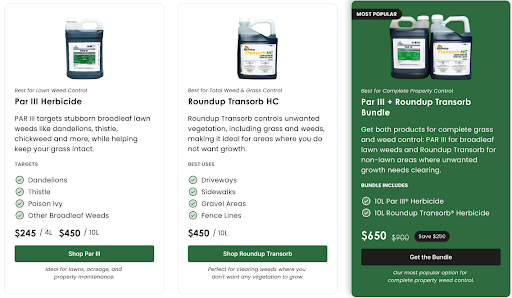
Once you understand where the weeds are growing and what type of control you need, it becomes easier to choose the right product. Canadian Lawn Co. offers weed control products for both lawn areas and non-lawn vegetation control, depending on the job.
This section should be used as a helpful product signpost rather than a hard-sell. Keep the focus on matching the product to the right use case.
Lawn Weed Control FAQs
What is the best weed killer for lawns in Canada?
The best weed killer for your lawn depends on the type of weeds you are dealing with and whether you want to protect the surrounding grass. For weeds growing within the lawn, a selective lawn weed killer is usually the more suitable option, as it is designed to target certain weeds without damaging the grass when used correctly.
What kills weeds but not grass?
Selective lawn herbicides are designed to control certain weeds while leaving grass unharmed when applied according to the product label. These are commonly used for broadleaf weeds such as dandelions, clover, plantain and similar lawn weeds.
Can I use Roundup on my lawn?
Roundup-style non-selective weed killers are not usually suitable for treating weeds in the middle of a lawn, as they can also damage or kill grass. They are generally better suited to non-lawn areas such as gravel, driveways, fence lines and unwanted vegetation areas.
When should I spray weeds in Canada?
Spring and fall are often useful times to treat lawn weeds, as weeds are typically actively growing. Avoid applying weed control products in strong wind, extreme heat or shortly before heavy rain unless the product label says otherwise.
Can I spray weed killer before rain?
It is usually best to avoid spraying weed killer before heavy rain, as rain can affect how well the product performs. Always check the product label for guidance on weather conditions and drying time.
How long does weed killer take to work?
This depends on the weed type, product type, weather conditions and how established the weeds are. Some weeds may show visible signs of stress sooner, while tougher or deeper-rooted weeds may take longer to die back.
Is weed killer safe for pets?
Always follow the product label carefully and keep pets away from treated areas during application. Check the label for any re-entry guidance before allowing pets back onto the lawn or treated area.
How do I stop weeds from coming back?
The best way to reduce future weed growth is to keep the lawn thick and healthy. Overseeding thin areas, repairing bare patches, mowing correctly, improving compacted soil and treating weeds before they spread can all help reduce future weed problems.